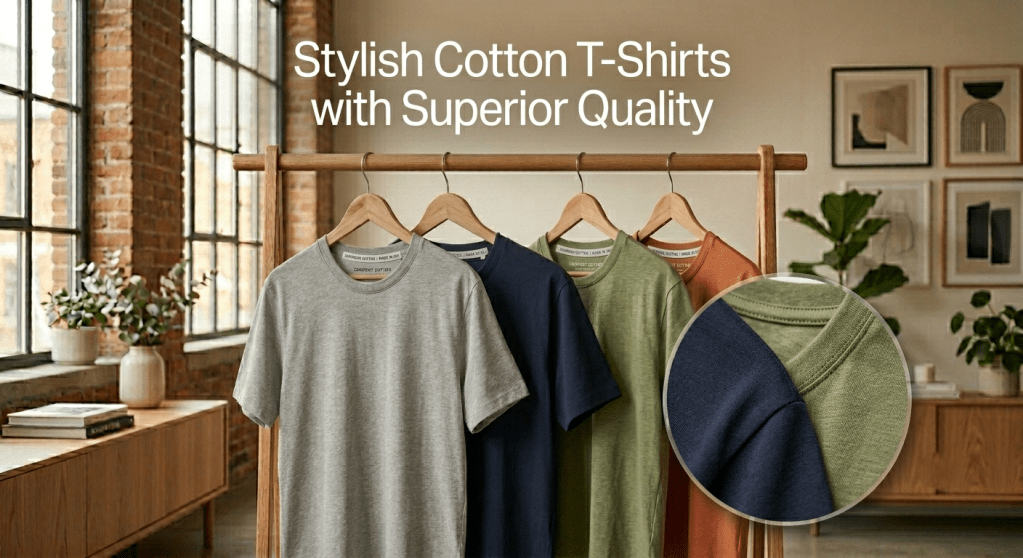
A t-shirt seems like the simplest thing you can buy. Pick a size, pick a color, done. Except anyone who’s bought a dozen “basic” tees over the years knows that’s rarely how it works out. Some shrink. Some lose shape after one wash. Some look fine until you actually put them on next to a better-made shirt and notice the difference immediately.
Superior quality isn’t a marketing phrase. It shows up in how a shirt is cut, stitched, dyed, and finished, long before it ever reaches a hanger. Stylish cotton t-shirts that hold up to real scrutiny are built with intention at every one of those stages, not just thrown together to hit a price point.
This article looks at what actually separates a genuinely well-made t-shirt from an average one, and why that difference matters more than most people realize.
The Manufacturing Details Most People Skip Past
Most shoppers check size and color, then move on. Few people stop to think about how a t-shirt was actually made, even though that process determines almost everything about how the shirt performs.
Cutting matters. Fabric cut against the grain can twist or warp after washing, even if the fabric itself is high quality. Properly aligned cutting keeps the shirt’s shape consistent through dozens of wash cycles.
Stitching matters even more. Single-needle stitching, often used in better-made shirts, creates a flatter, more durable seam than the cheaper overlock stitching found in mass-produced basics.
Why Dye Quality Affects Longevity
Color fading is one of the most common complaints about cheap t-shirts, and it almost always traces back to dye quality and application method. Reactive dyes, properly set during manufacturing, bond more permanently with cotton fibers than cheaper pigment dyes that sit on the surface.
This is part of why a black t-shirt from one brand might fade to grey within a month, while a similar shirt from a quality-focused brand stays dark for years. The fabric might look identical on day one, but the dye process tells a very different story over time.
Quality Clothing Starts With the Right Cotton Grade
Not all cotton fibers are created equal, and the grade used in a t-shirt has a massive impact on how the finished garment feels and performs. Long-staple cotton, with its longer individual fibers, produces smoother, stronger yarn than short-staple alternatives.
This single difference in fiber length explains a lot about why some t-shirts feel noticeably better against skin, resist pilling longer, and maintain their shape through repeated washing. It’s a difference you can often feel within the first few seconds of touching two shirts side by side, even before checking a single label.
Brands serious about quality often specify their cotton grade directly, mentioning terms like combed cotton, ring-spun yarn, or specific fiber origins. These aren’t empty buzzwords. They reflect real differences in how the final fabric behaves.
Reading Labels Like Someone Who Knows What to Look For
Most care labels list fiber content as a simple percentage, but a few additional terms are worth watching for. “Pre-shrunk” indicates the fabric has already undergone shrinkage treatment, reducing surprises after the first wash. “Combed cotton” signals that shorter, weaker fibers were removed before spinning, leaving a smoother, more durable thread.
Learning to spot these terms takes a few seconds and can meaningfully change which shirt ends up in your cart.
Stylish Clothing Built on a Foundation of Fit
Even the best fabric falls flat if the fit is wrong. Stylish clothing depends heavily on proportion, and a t-shirt is no exception. Sleeves that are too long, a body that’s too boxy, or a neckline that gapes awkwardly can undermine an otherwise well-made shirt.
Good fit comes from careful pattern grading across sizes, not just scaling a single template up or down. Brands that invest time in this process tend to produce shirts that look intentional on a wider range of body types.
Matching Fit to Personal Style
Fit isn’t only about flattering proportions. It’s also about matching your personal style preferences, whether that’s a slim, fitted silhouette or a relaxed, oversized cut.
A genuinely well-made t-shirt should hold its intended shape regardless of which fit you choose. A relaxed style shouldn’t sag awkwardly after a few washes, and a fitted style shouldn’t stretch out of shape by the end of the day.
How Comfortable Fashion Connects to Construction Quality
Comfort and construction are far more connected than most people assume. A shirt built with reinforced seams, properly finished hems, and tagless printing tends to feel more comfortable simply because there’s less friction and irritation against skin.
Comfortable fashion isn’t just about soft fabric. It’s about the entire construction working together, from seam placement to collar finishing, so nothing pulls, scratches, or shifts uncomfortably throughout the day.
This is why two shirts made from seemingly similar cotton can feel completely different once you’re actually wearing them for several hours.
Small Construction Choices With a Big Impact
Flat-lock seams reduce chafing under the arms and along the sides. Ribbed collars hold their shape instead of stretching out after repeated wear. Double-stitched hems resist fraying far longer than single-stitched alternatives.
None of these details show up in a quick glance at a shirt on a hanger, but they show up clearly after a few months of regular wear.
Following Current Style Without Losing Quality Standards
Fashion trends move quickly, and it’s tempting to chase whatever silhouette or color is trending without considering construction quality. This often leads to closets full of trendy pieces that look dated and worn out within a single season.
A smarter approach treats current trends as a styling layer on top of quality basics, rather than the entire foundation of a purchase decision. A well-made cotton tee in a currently popular cut delivers both relevance and durability, giving you the best of what’s fashionable right now without gambling on how it holds up later.
Trends That Reward Quality Construction
Certain trends actually highlight construction quality more than others. Cropped, fitted silhouettes show seam quality more clearly than baggy cuts, since there’s less excess fabric to hide imperfections. Minimalist, logo-free designs put the spotlight entirely on fabric and fit, with nothing else to distract from flaws.
Choosing well-constructed basics becomes even more important when trends lean toward simplicity, since there’s nowhere for poor quality to hide.
Premium Fashion Doesn’t Mean Overpriced
There’s a common assumption that premium fashion automatically means high prices. In reality, the term reflects construction and material quality, not a specific price tier. Plenty of reasonably priced brands deliver genuinely superior quality by focusing their resources on fabric and construction rather than marketing and packaging.
The smartest shoppers look past brand names and price tags entirely, focusing instead on fabric weight, stitching quality, and dye application.
Finding a Genuine Yard of Deal on Superior Quality Tees
Quality and affordability aren’t mutually exclusive. A real yard of deal on well-made cotton t-shirts typically appears during seasonal clearance periods or through multipack bundles from brands that specialize specifically in basics.
The best approach involves a bit of patience. Watching for genuine markdowns, rather than chasing flash sales with inflated original prices, usually leads to better long-term value on superior quality pieces.
Checking Fit Before You Buy
A quick trick that helps avoid sizing disappointments: measure a t-shirt you already own and love against the size chart of a new brand before ordering. Chest width, body length, and sleeve length are the three measurements that matter most, and comparing them directly avoids relying purely on a generic size label like “medium” or “large,” which can vary significantly between brands.
Caring for Quality Cotton Tees to Preserve Their Construction
Even superior construction needs proper care to last. Wash in cold water to protect both color and fiber integrity. Turn shirts inside out before washing to reduce friction against printed designs and external surfaces.
Avoid high-heat drying whenever possible, since excessive heat accelerates fiber breakdown and shrinkage. Folding rather than hanging also helps preserve shoulder shape over time.
Conclusion
Stylish cotton t-shirts with superior quality aren’t defined by flashy branding or inflated prices. They’re defined by construction details that most shoppers never think to check: stitching technique, dye application, fiber grade, and fit precision across sizes.
Whether you’re searching for a smart yard of deal during a seasonal sale or simply replacing worn-out basics, understanding these details helps you separate genuine quality clothing from shirts that only look good on the surface. Premium fashion and stylish clothing built around solid construction outlast fleeting fashion trends, delivering comfortable fashion that actually holds up to real, everyday wear.
FAQs
What’s the biggest sign of a well-made cotton t-shirt? Even, flat stitching along the seams and hems is one of the clearest indicators of quality construction, along with smooth, consistent fabric texture.
Does higher price always mean better quality in t-shirts? Not necessarily. Price can reflect branding and marketing rather than construction quality, so checking fabric grade and stitching details matters more than the price tag alone.
How can I tell if a cotton tee will hold its color over time? Look for mentions of reactive dye processes on the label, and check for even color saturation without visible patchiness, which often indicates better dye application.
Should I prioritize fit or fabric quality when choosing a t-shirt? Both matter, but fabric quality affects long-term durability while fit affects everyday comfort and appearance, so ideally neither should be compromised.
When is the best time to buy quality cotton t-shirts at a discount? Seasonal clearance periods and multipack promotions from basics-focused brands typically offer the most genuine savings without sacrificing construction quality.


